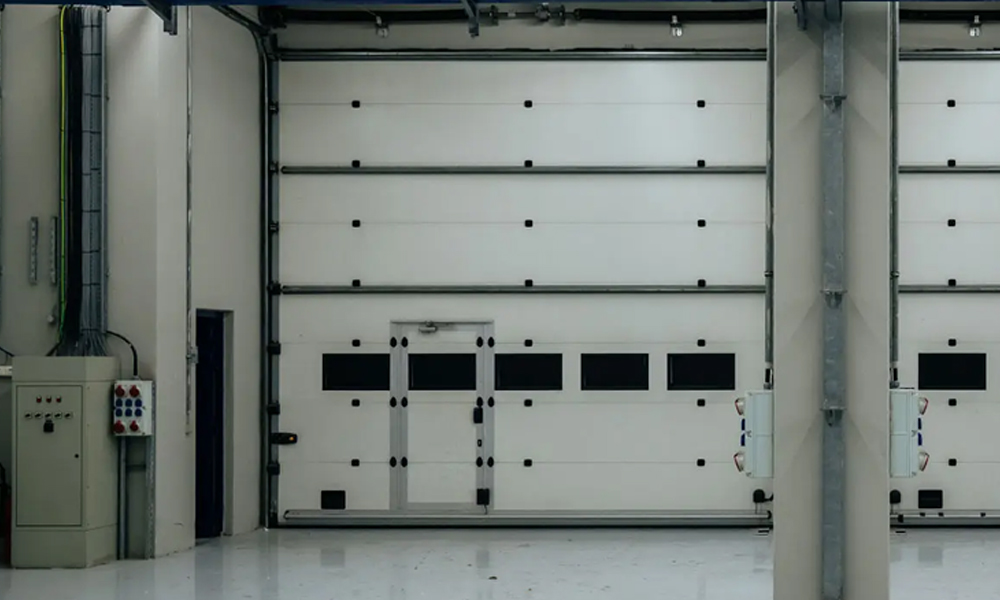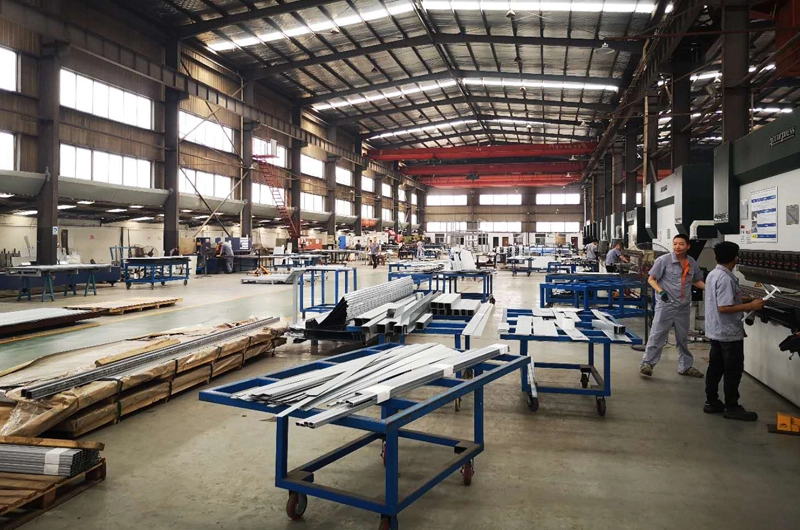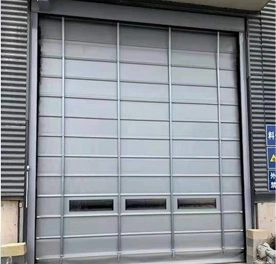
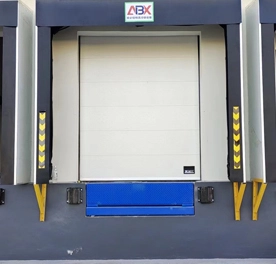
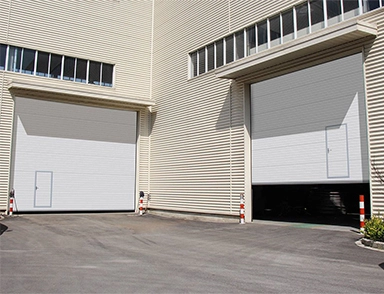
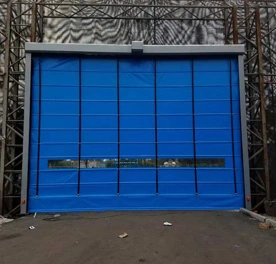
In 2025, the industrial sectional door is no longer just a barrier—it’s a data-generating, self-diagnosing, efficiency-optimizing asset. The convergence of Internet of Things (IoT) technology with overhead sectional doors has created a new category: smart industrial entrances. These systems don’t just open and close—they predict failures, optimize energy, integrate with warehouse automation, and deliver actionable insights in real time.
This guide explores how IoT-enabled sectional doors are redefining warehouse operations. From predictive maintenance to seamless WMS integration, you’ll discover the technology, benefits, real-world deployments, and critical questions to ask before investing. By the end, you’ll have a clear roadmap to evaluate if your facility is ready for the next generation of industrial doors.

The foundation of any IoT-enabled sectional door is its sensor suite. Modern systems embed vibration, temperature, position, current draw, and cycle-count sensors directly into motors, rollers, springs, and tracks.
Vibration sensors detect roller wear before it causes misalignment.
Motor current monitoring identifies torque spikes that signal track debris or seal drag.
Position encoders track panel alignment to 1 mm accuracy, preventing unsafe partial openings.
Environmental sensors log humidity and temperature to correlate with seal degradation.
These inputs feed into an edge gateway—a compact processor mounted on the door frame—that performs real-time analytics and transmits only actionable data to the cloud. This edge-first architecture reduces latency and bandwidth while enhancing security.
The true power of IoT doors emerges when they speak the same language as your WMS, ERP, and BMS.
| System | Integration Method | Outcome |
|---|---|---|
| WMS (SAP, Manhattan) | MQTT / OPC-UA | Auto-open on pick confirmation |
| AGV Fleet | REST API | Synchronized door + vehicle timing |
| BMS (Siemens Desigo) | BACnet | HVAC ramp-up before door cycle |
| Security | SAML/OAuth | Access-linked door activation |
A leading 3PL in the Midlands reduced bay dwell time by 42 seconds per truck by triggering door opening exactly when the trailer backs into position—no driver input required. The IoT door received the signal from the yard management system and executed the command in 0.8 seconds.
Unplanned door failure is the silent killer of warehouse throughput. A single stuck sectional door can halt six loading bays and cost £3,000+ per hour in delayed dispatches.
IoT systems shift maintenance from reactive to predictive using machine learning models trained on millions of cycles.
| Failure Mode | Early Indicator | Lead Time Gained |
|---|---|---|
| Spring fatigue | Cycle count + torque drift | 4–6 weeks |
| Roller bearing wear | Vibration spike at 7–9 kHz | 3–5 weeks |
| Seal compression loss | Motor current increase >15% | 2–4 weeks |
| Track misalignment | Position encoder drift | 1–3 weeks |
Facility managers receive color-coded alerts (Green → Yellow → Red) via mobile app, with automated work order creation in CMMS platforms like IBM Maximo. One automotive parts distributor cut emergency callouts by 67% in the first year.
A national parcel carrier retrofitted 42 IoT sectional doors across three hubs.
Outcome: 18% faster truck turnaround, £1.4M annual labor savings.
Key Feature: Geofenced auto-open—doors activate when GPS-tagged trailers enter a 10-meter zone.
A frozen food distributor installed IoT doors with insulated 80mm panels.
Outcome: Temperature excursions dropped from 14 to 0 per month.
Key Feature: Pre-cycle HVAC boost triggered 30 seconds before opening.
A Tier-1 supplier synchronized 12 doors with robotic lines.
Outcome: Zero line stops due to door delays in Q3 2025.
Key Feature: PLC handshake via PROFINET—door status as a digital twin input.
Pro Tip: Start with a pilot on 2–3 high-impact bays to build ROI data before full rollout.
Not all IoT doors are created equal. Here’s what separates 2025-ready systems from obsolete ones:
| Feature | Must-Have | Nice-to-Have |
|---|---|---|
| Firmware OTA Updates | Yes | |
| 5G / Wi-Fi 6E Ready | Yes | |
| Zero-Trust Architecture | Yes | |
| Modular Sensor Bus | Yes | |
| Open API Documentation | Yes | |
| Digital Twin Support | Yes | |
| AR Troubleshooting App | Yes |
Choose systems with MQTT over TLS 1.3 and device certificates—not username/password logins. A single compromised door could grant physical access to your entire facility.
| Metric | Traditional Door | IoT-Enabled Door | Delta |
|---|---|---|---|
| Annual maintenance cost | £4,200 | £1,100 | -74% |
| Unplanned downtime (hrs) | 42 | 8 | -81% |
| Energy loss per cycle | 0.9 kWh | 0.6 kWh | -33% |
| Labor (driver + clerk) | £18,000 | £11,000 | -39% |
| Total 5-Year Savings | - | - | £92,000 per door |
Based on 5m × 5m door, 120 cycles/day, 250 days/year.
This is the first one.