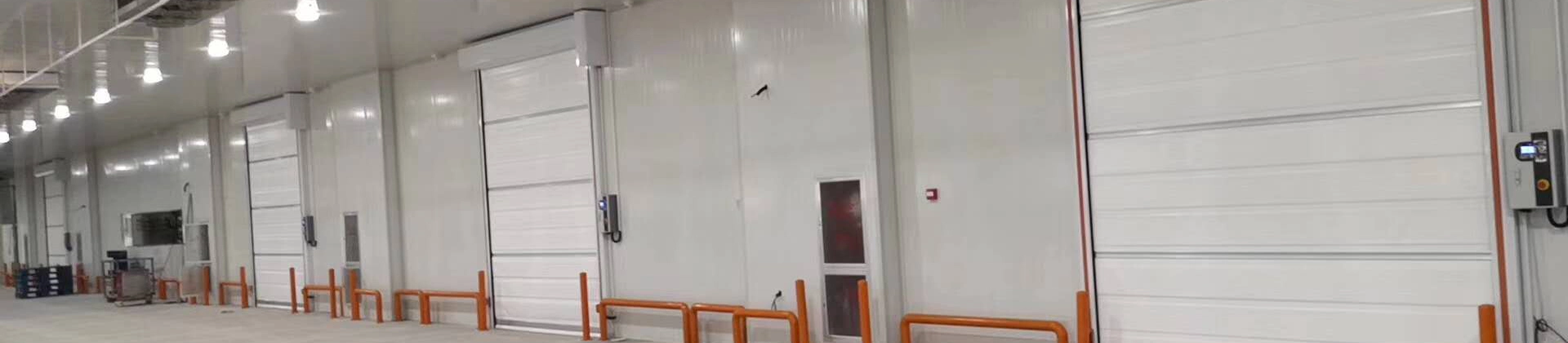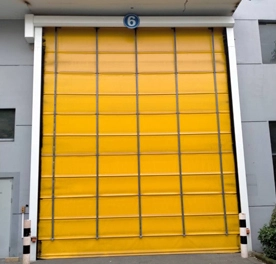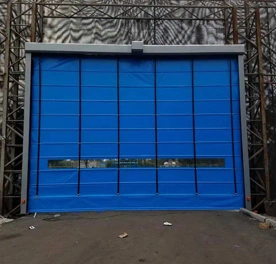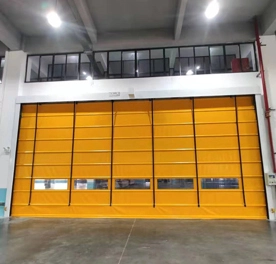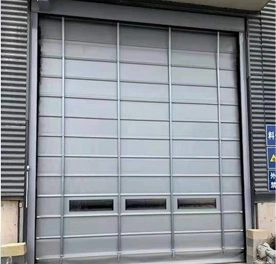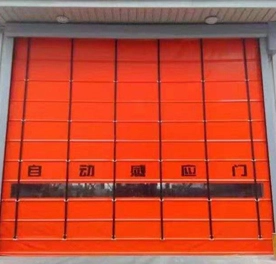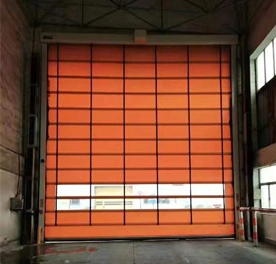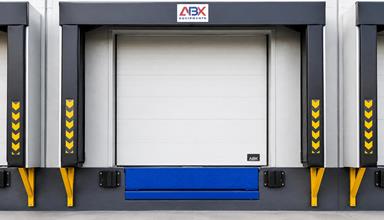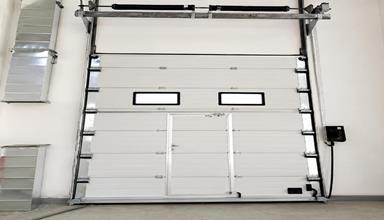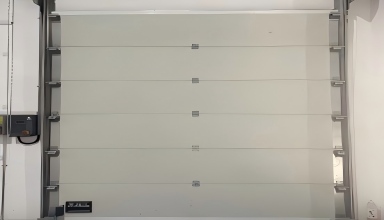
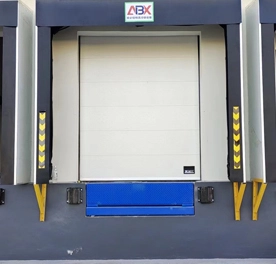
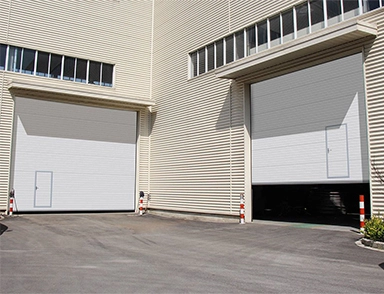
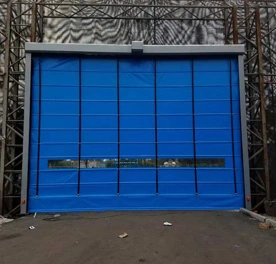
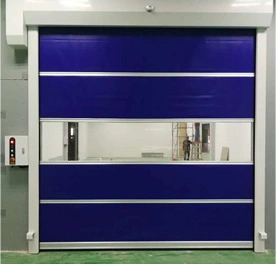
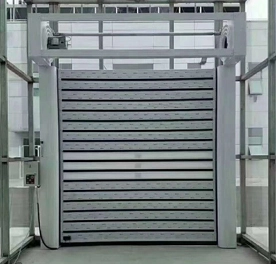
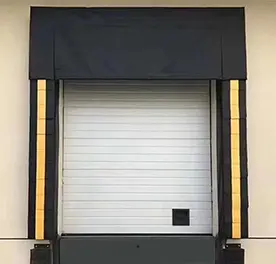
Anbixin large industrial doors are designed for oversized openings in factories, warehouses, logistics facilities and heavy industrial buildings. Using a flexible curtain, horizontal reinforcement and an upward folding or stacking mechanism, these doors provide a practical solution where conventional industrial doors may be limited by opening width, height or available installation space.
Our industrial folding doors include fast stacking, soft-curtain, strap-lifting, wind-resistant and extra-large configurations for different operating environments. Door dimensions, curtain structure, reinforcement, lifting system, controls and safety options can be configured according to opening size, wind exposure, operating frequency and project requirements.
For industrial facilities requiring wide or tall access for vehicles, machinery or material handling, Anbixin can help evaluate a suitable large-opening door solution based on actual site conditions.
Large industrial openings do not all require the same door structure. Different industrial stacking doors are available depending on door dimensions, opening frequency, wind conditions and the type of traffic passing through the entrance.
| Door Type | Main Characteristic | Suitable Applications |
| Fast Stacking Door | Flexible curtain with rapid upward stacking | Busy factories and logistics entrances |
| Rapid Folding Door | Fast vertical folding movement | Frequent industrial traffic |
| Soft Curtain Stacking Door | Flexible curtain construction | Large indoor or protected industrial openings |
| Strap Stacking Door | Strap-based lifting structure | Wide and tall industrial entrances |
| Automatic Strap Stacking Door | Motorized stacking operation | Automated industrial access |
| Wind-Resistant Stacking Door | Reinforced structure for increased wind resistance | Exterior industrial openings |
| Extra-Large Industrial Stacking Door | Designed around oversized openings | Large machinery and heavy-industry access |
Different industrial doors solve different access problems. A large stacking door is not automatically the best choice for every opening.
| Door Type | Door Structure | Best Suited For | Main Selection Priority |
| Large Industrial Folding Door | Reinforced flexible curtain | Extra-wide or extra-high openings | Large opening capability |
| Industrial Sectional Door | Rigid sectional panels | Warehouses and standard industrial entrances | Insulation and versatility |
| Vertical Lift Door | Rigid panels travelling vertically | High-bay buildings | Clear overhead space |
| High-Speed Spiral Door | Rigid high-speed panels | Frequent vehicle entrances | Speed, security and appearance |
Consider a large folding or stacking system when:
The opening is particularly wide or tall.
Large machinery or industrial vehicles need access.
Side installation space is limited.
A flexible curtain structure is suitable for the application.
The project requires a door specifically designed around a large opening.
Wind load and structural reinforcement can be evaluated during engineering.
If your project requires rigid insulated panels instead, explore our industrial sectional doors.
For high-clearance buildings where the door must travel vertically along the wall, see our vertical lift doors.
Large industrial doors are primarily used where standard commercial door dimensions or structures are not sufficient for the required opening.
Manufacturing facilities may require oversized entrances for production machinery, large components, industrial vehicles or material handling.
For these applications, door dimensions should be coordinated with the largest equipment or vehicle that needs to pass through the opening.
Large warehouses may require wide access points for trucks, forklifts or bulk material movement.
An industrial stacking door can provide vertical operation while keeping the areas beside the doorway relatively clear.
For facilities with several different access requirements, explore our warehouse door solutions.
Manufacturers of large machinery, vehicles or engineered equipment often require openings substantially larger than standard industrial door sizes.
A custom large industrial folding door can be evaluated according to the equipment dimensions, traffic route and available building space.
Buildings with tall entrances may benefit from a folding or stacking system where the curtain can be collected above the opening without requiring the same structural arrangement as a conventional rigid-panel door.
Exterior industrial entrances require additional consideration of wind exposure, weather conditions, guide stability and building structure.
For these projects, door dimensions and required wind resistance should be reviewed together rather than selecting the door based on opening size alone.
Wind load becomes increasingly important as the surface area of an industrial door increases.
A large flexible curtain exposed to external wind pressure requires appropriate reinforcement, guide support and structural fixing.
Depending on the selected door configuration, horizontal reinforcement can help stabilize the curtain and distribute loads across the door structure.
When evaluating a large exterior door, important factors include:
Opening width and height
Building location
Indoor or outdoor installation
Local wind conditions
Surrounding building exposure
Curtain reinforcement
Guide rail design
Supporting steel structure
There is no single wind-resistance specification that is suitable for every large door.
The required performance should be determined according to the actual opening dimensions and project wind-load requirements.
Large industrial doors should be designed around the building opening, operating environment and structural conditions rather than treated as standard-size products.
Door dimensions, curtain structure, reinforcement and lifting arrangements can be evaluated according to specific project requirements.
Anbixin offers different industrial stacking door configurations for frequent traffic, large openings, wind-exposed entrances and other industrial applications.
Opening dimensions, building structure, traffic type and environmental requirements can be reviewed before the final door configuration is confirmed.
Materials, dimensions, mechanical components, appearance and packaging can be inspected during production and preparation for delivery.
Site drawings, opening dimensions and project information can be reviewed during product selection to help reduce mismatches between the door system and installation conditions.
Choosing a large industrial door requires a project-based approach. The following information should be reviewed before the final configuration is selected.
Measure the clear width and height of the doorway.
Large increases in either dimension can significantly affect curtain reinforcement, lifting capacity and supporting structure.
The door should be sized around actual operational requirements rather than simply making the opening as large as possible.
Provide the dimensions of the largest truck, machine, vehicle or component expected to pass through the entrance.
For exterior installations, wind conditions should be considered during door selection.
This becomes particularly important for extra-wide and extra-high openings.
An entrance used occasionally for large equipment has different operating requirements from a logistics door opening repeatedly throughout the working day.
Higher traffic frequency may make a high speed folding door configuration more appropriate.
Measure the space above and beside the opening and identify any structural beams, pipework, lighting or equipment that may affect installation.
Determine whether the door needs to separate indoor and outdoor environments, production zones or areas with different temperature or cleanliness requirements.
Depending on the project, operation may involve push buttons, remote controls, sensors or other activation methods.
Safety requirements should also reflect the movement of personnel, forklifts, trucks and industrial equipment around the door.
A large industrial folding door uses a flexible reinforced curtain that is lifted and folded or stacked above the opening. It is designed for wide or tall industrial entrances where large vehicles, machinery or equipment require access.
A stacking door lifts and folds its curtain into sections above the opening, while a roller shutter winds its curtain or slats around a barrel. Their structures, installation requirements and suitable opening sizes are different.
An industrial folding door generally uses a flexible reinforced curtain, while a sectional door uses multiple rigid panels connected by hinges. Folding doors are particularly useful for certain oversized openings, while sectional doors are commonly chosen where rigid panels and insulation are important.
The practical maximum size depends on the selected door model, opening dimensions, wind load, supporting structure and project conditions. Extra-large doors should therefore be evaluated on a project-by-project basis rather than using one universal maximum dimension.
Yes, depending on the selected configuration and project conditions. For exterior openings, wind exposure, reinforcement, guide rails, structural fixing and weather conditions should be reviewed before the door is specified.
A high speed folding door can be suitable for industrial entrances with frequent vehicle or logistics traffic. The required opening speed and operating frequency should be confirmed during product selection.