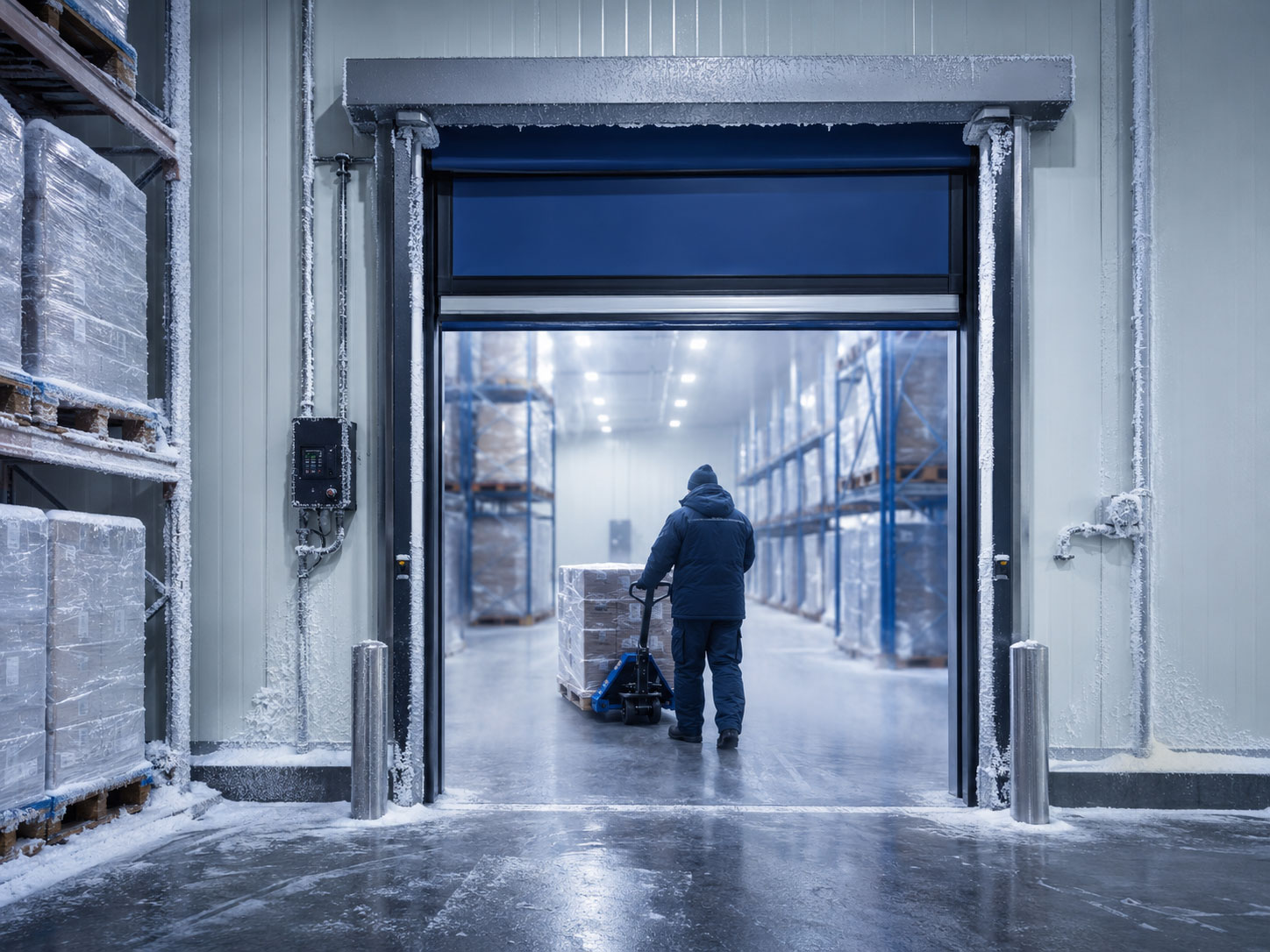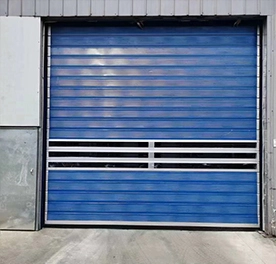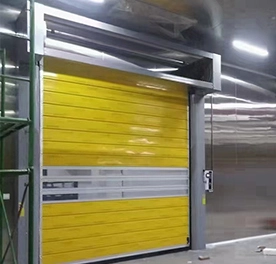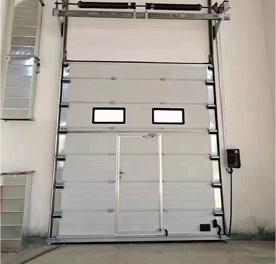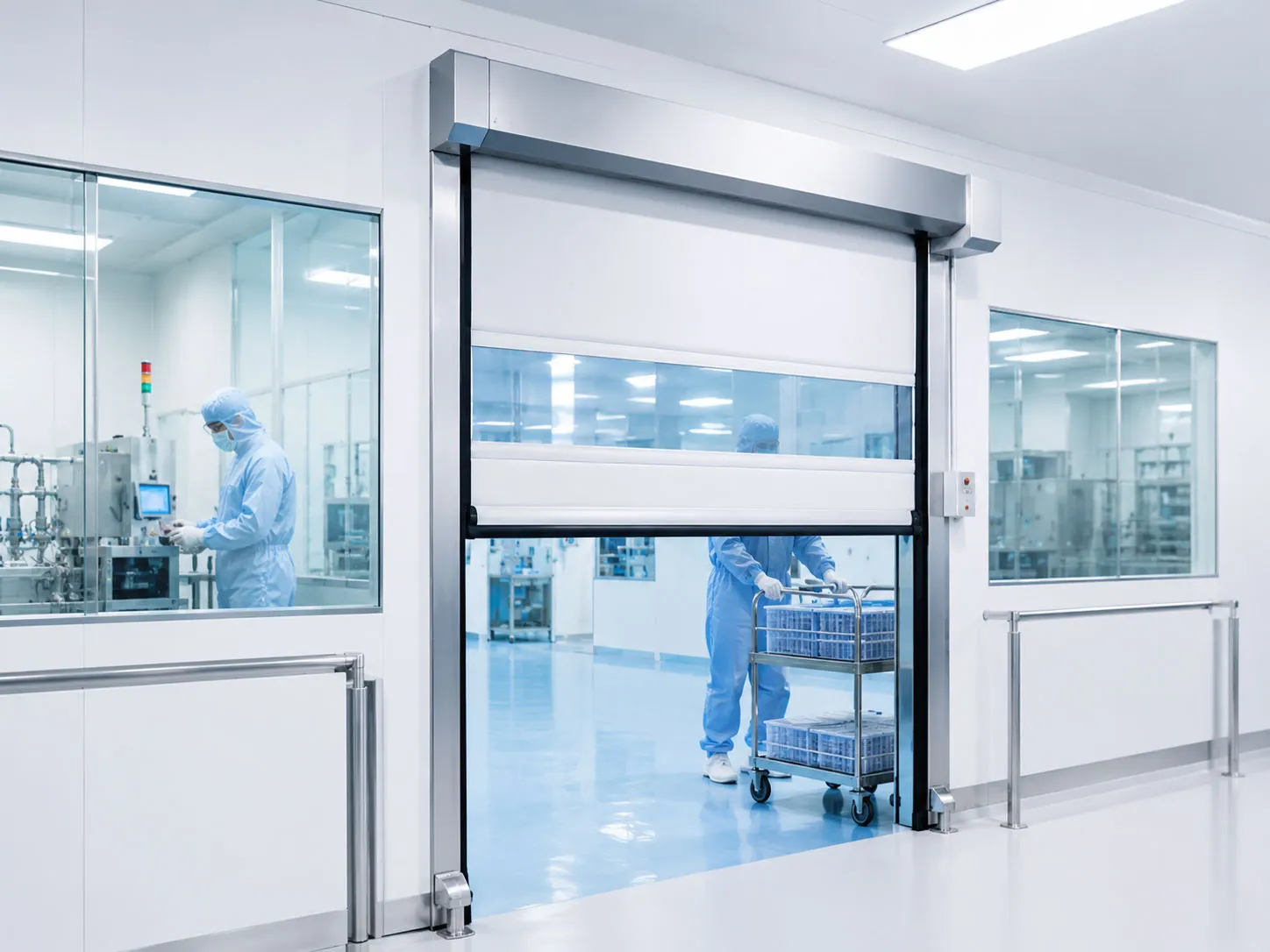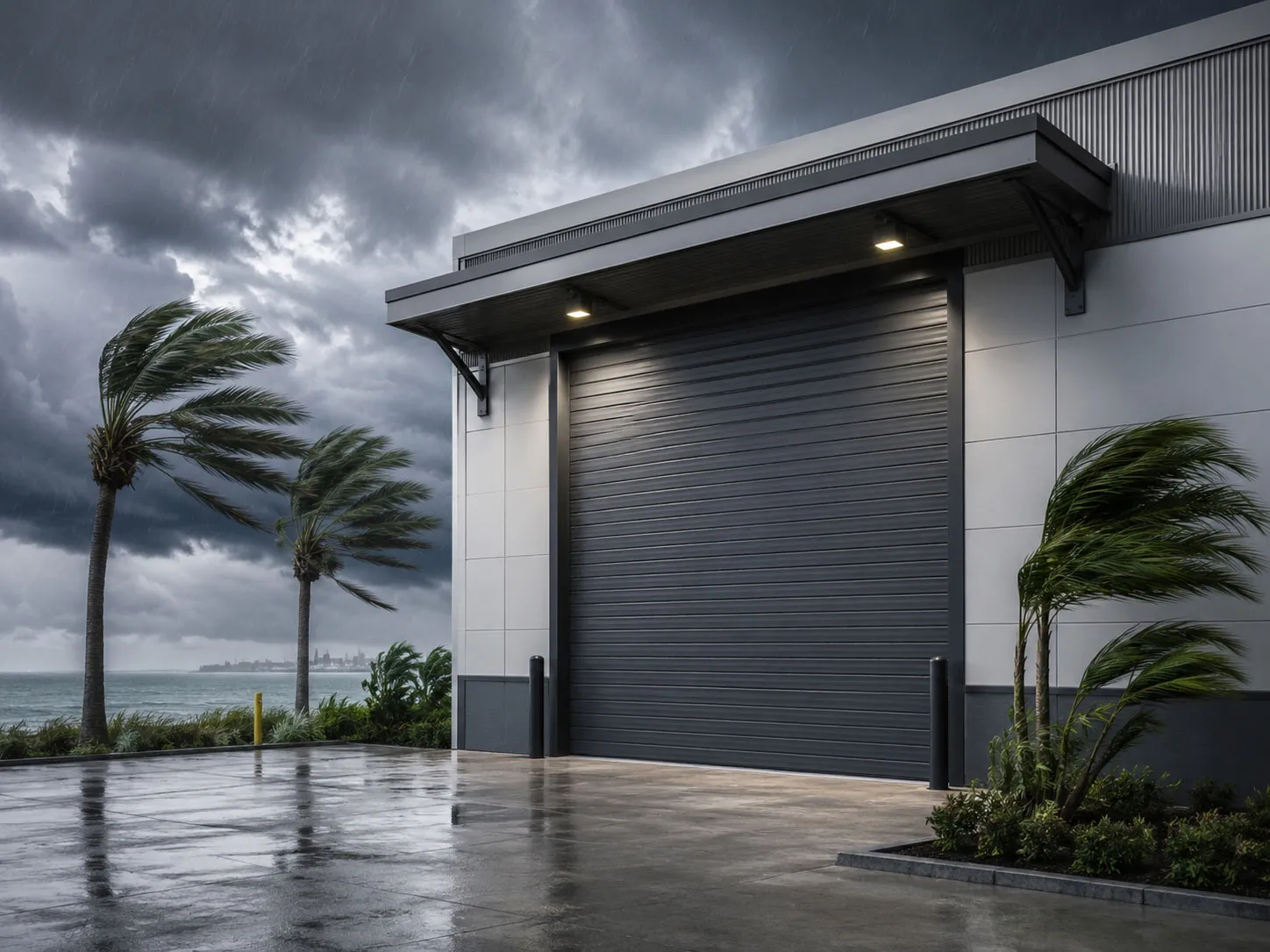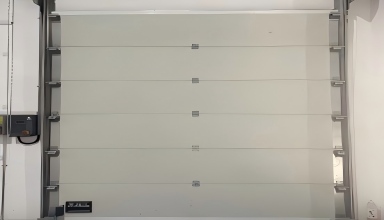
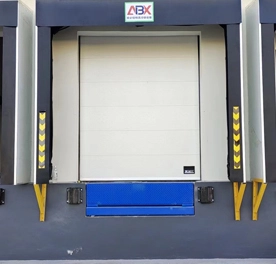
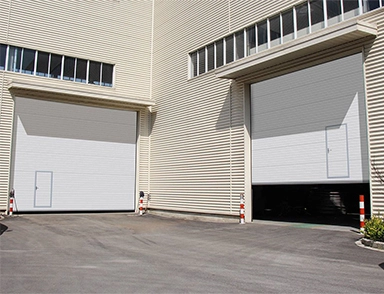
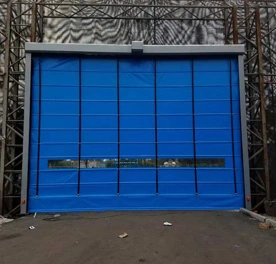
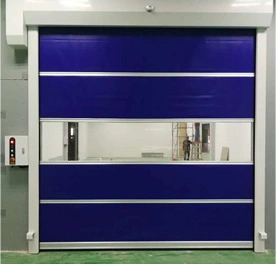
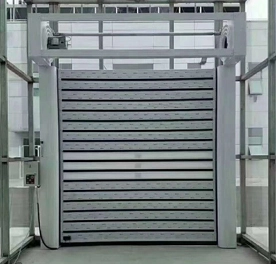
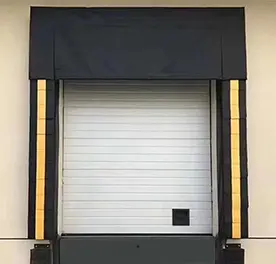
An industrial freezer door is an access system configured for areas that operate below freezing and require reliable movement between different temperature zones.
Freezer doors face more demanding conditions than cooler doors. When warm, humid air enters the opening, moisture can condense and freeze on surfaces, seals or floors. This can reduce visibility, affect operation and create maintenance or safety problems.
The selected door must therefore address opening time, insulation, perimeter contact, low-temperature component suitability and the way traffic moves through the entrance. A fast internal door, an insulated sectional door and a rigid spiral door each solve a different balance of these requirements.

Freezer entrance problems are usually caused by air exchange, frost, impact risk and components that are not selected for the minimum operating temperature.
Warm-air infiltration and visible vapor around an open doorway.
Frost or ice accumulation near guides, seals and floor areas.
Slow doors that interrupt forklift and pallet movement.
Damage from impacts when visibility is reduced by vapor or traffic congestion.
Motors, sensors or controls that perform poorly at low temperatures.
Insufficient emergency opening arrangements for personnel and operations.
The door should be evaluated together with airflow, humidity, traffic management and the temperature on both sides of the opening.
Anbixin freezer-door selection depends on how often the opening operates, whether it is internal or external and how much insulation and security are required.
Recommended Product | Best Fit | Why It Fits |
Frequently used internal freezer entrances, subject to a verified low-temperature configuration. | Fast cycles reduce the period of air exchange and support efficient forklift or cart movement. | |
Busy entrances needing rigid insulated panels and controlled access. | Combines rapid operation with a substantial panel barrier and secure vertical guidance. | |
Lower-cycle openings and larger exterior freezer bays. | Insulated panel construction suits locations where thermal separation is more important than maximum cycle speed. |
A high-speed fabric door should not be specified for a freezer solely because it works in a cooler. The curtain, motor, sensors, seals and controls must be confirmed for the required minimum temperature.
Freezer-door options should be selected to control open time, support low-temperature operation and reduce frost-related downtime.
Verified minimum operating temperature for the complete door system.
Suitable curtain or insulated panel construction.
Perimeter seals matched to the guide and floor condition.
Fast automatic closing with an appropriate traffic delay.
Radar, loop, pull-cord or remote activation for forklifts and personnel.
Photoelectric sensors, light curtains or safety edges.
Emergency manual release and power-failure procedures.
Heated guides, seals, controls or airflow devices where available and technically required.
A freezer-door specification should state both the environmental conditions and the traffic pattern so the supplier can evaluate low-temperature performance and operating speed together.
1. State the normal and minimum temperature inside the freezer and the temperature outside.
2. Describe humidity, frost and airflow conditions at the opening.
3. Provide width, height, headroom, side clearance and floor details.
4. Identify forklifts, automated equipment, carts and pedestrian traffic.
5. Estimate daily cycles and the typical time needed to pass through.
6. Confirm controls, safety devices, power supply and emergency-opening requirements.
7. List any insulation, energy, documentation or certification targets.
Anbixin can then compare the operational benefit of a fast door with the thermal benefit of a more heavily insulated door and recommend an appropriate structure.
A freezer door performs best when its controls, traffic flow and maintenance plan are coordinated with the cold-storage process.
Activation should occur early enough for a forklift to pass without stopping, but not so early that the opening remains exposed. Closing delays should reflect actual vehicle length and speed. Floor drainage, defrost procedures and maintenance access should also be reviewed.
For automated storage systems or conveyor openings, provide the operating sequence and interface requirements so Anbixin can determine whether a standard traffic door or a specialized controlled opening is required.
Not automatically. A freezer installation requires confirmation of minimum operating temperature, insulation, sealing and low-temperature suitability for the complete system.
Fast operation can reduce air exchange, but overall performance also depends on insulation, sealing, opening frequency and how long traffic keeps the door open.
Availability depends on the selected model and project. Heated guides, seals or controls should only be included after Anbixin confirms the exact configuration.
Provide temperatures on both sides, humidity and frost conditions, dimensions, daily cycles, traffic type, controls, power supply and destination market requirements.