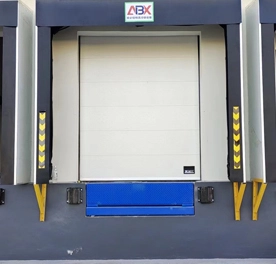
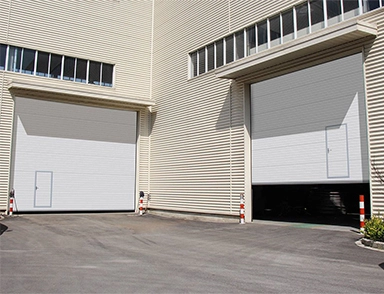
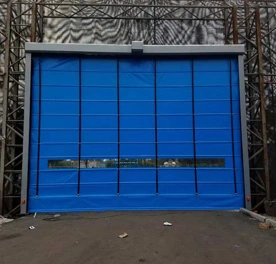
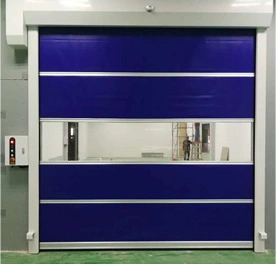
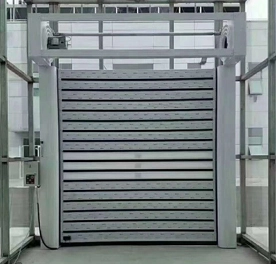

A fire station door is an industrial vehicle-bay door configured for rapid emergency deployment, dependable daily operation and safe clearance of large response vehicles. The door must create a clear path for fire engines, ambulances and rescue equipment without introducing unnecessary delays. Opening speed matters, but reliability, visibility, safety detection and emergency operation are equally important. The appropriate door depends on the largest vehicle, bay width and height, available headroom, exterior weather conditions and the number of routine and emergency cycles.
Emergency vehicle-bay doors must prioritize rapid clearance, predictable operation, safe vehicle movement and practical recovery if power or controls fail.
Fast opening that clears the full vehicle path before departure.
Reliable operation during drills, daily movements and emergency calls.
Adequate width and height for mirrors, ladders, lights and roof equipment.
Clear visibility and detection around long or high vehicles.
A closing sequence that protects personnel and equipment after exit.
Manual release or backup procedures for power interruption.
Exterior resistance to wind, rain and temperature conditions.
The door should be integrated into the station’s dispatch routine so activation occurs at the right point and the opening is fully clear before vehicle movement.
Anbixin recommends emergency bay doors according to required speed, opening size, cycle frequency, security and building geometry.
Recommended Product | Best Fit | Why It Fits |
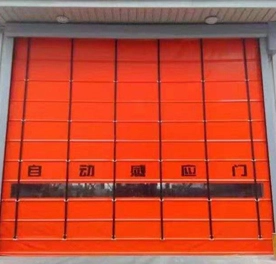
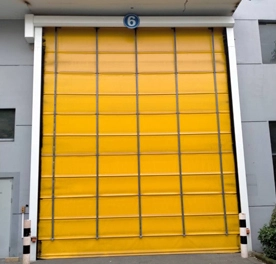
Frequently used emergency vehicle bays requiring rapid rigid-door operation. | Selected Anbixin spiral models are listed with opening speeds up to 2.0 m/s, subject to size and configuration. | |
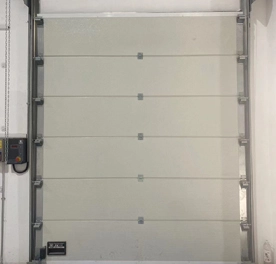
Secondary bays, lower-cycle stations and projects requiring specific lift tracks. | Rigid insulated panels and standard, high-lift or vertical-lift arrangements suit different bay geometries. | |
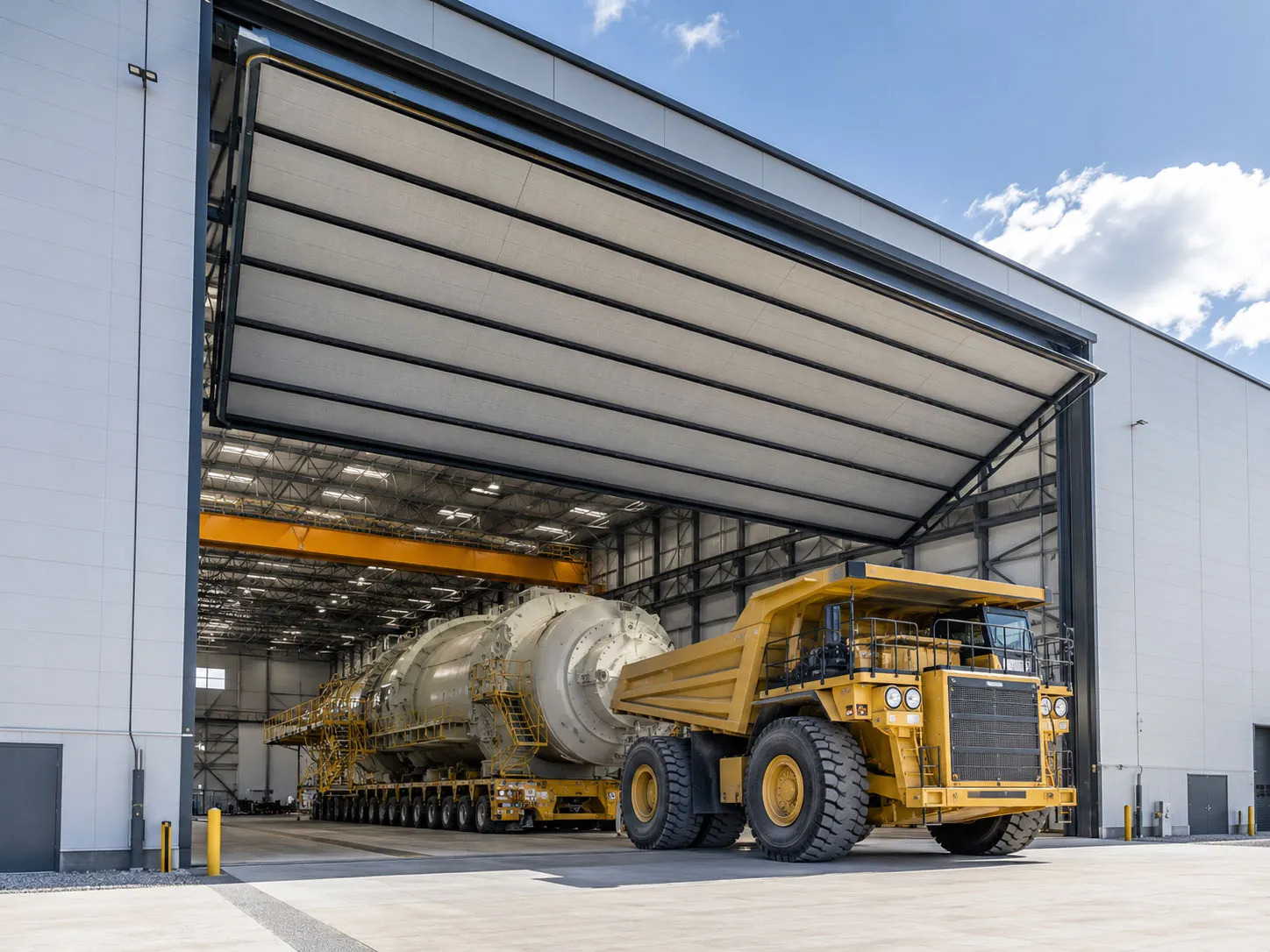
Rescue equipment buildings and unusually wide or tall vehicle entrances. | Custom fold-up structures can be engineered for oversized apparatus and equipment access. |
A high-speed spiral door is typically the first option for a frequently used main response bay. Sectional and large industrial doors cover secondary bays and exceptional opening sizes.
Emergency bay controls should provide immediate, simple activation while maintaining vehicle detection, personnel protection and a clear operating status.
· Dispatch-linked, push-button, remote or pull-cord activation.
· Traffic lights or visible status indicators inside and outside the bay.
· Photoelectric sensors, light curtains and safety edges.
· Vision panels for checking the approach area.
· Emergency stop controls and manual release procedures.
· Backup power interface where required by the facility.
· Adjustable closing delay based on vehicle length and station procedures.
The final sequence should be reviewed with station personnel. Complex controls should not make emergency operation harder.
A fire station door specification should begin with the largest vehicle envelope and the required operational sequence from dispatch to secure closure.
Provide the maximum vehicle width and height, including mirrors and roof equipment.
State the required clear opening and available headroom and side room.
Define the target opening time or speed and daily cycle estimate.
Describe the activation sequence during an emergency call.
Confirm safety sensors, signaling and visibility requirements.
State wind, insulation, security and exterior weather conditions.
Define power-failure, manual-release and maintenance access requirements.
Anbixin can review this information and recommend whether a spiral, sectional or large-opening structure is most appropriate.
Anbixin supports emergency response projects with custom dimensions, control configuration and product coordination for vehicle-bay openings.
Anbixin’s published project portfolio includes an emergency rescue facility, along with heavy-industry and transportation projects. For new fire station or rescue-bay work, the focus should be placed on the exact vehicle envelope and operating sequence rather than adapting a generic warehouse door.
For stations with several bays, Anbixin can help standardize controls and safety devices while selecting different structures for main response bays, secondary vehicles and oversized equipment.
A high-speed spiral door is a strong option for a frequently used main bay. Sectional doors may suit secondary or lower-cycle bays, while large industrial doors address oversized equipment openings.
Selected spiral models are listed with speeds up to 2.0 m/s, but actual performance depends on door size, weight, controls and final configuration.
A control interface may be possible. The required signal, operating sequence and backup procedure should be confirmed during engineering.
Send the largest vehicle width and height, including mirrors, lights, ladders and roof equipment, plus the desired clearance around the vehicle.