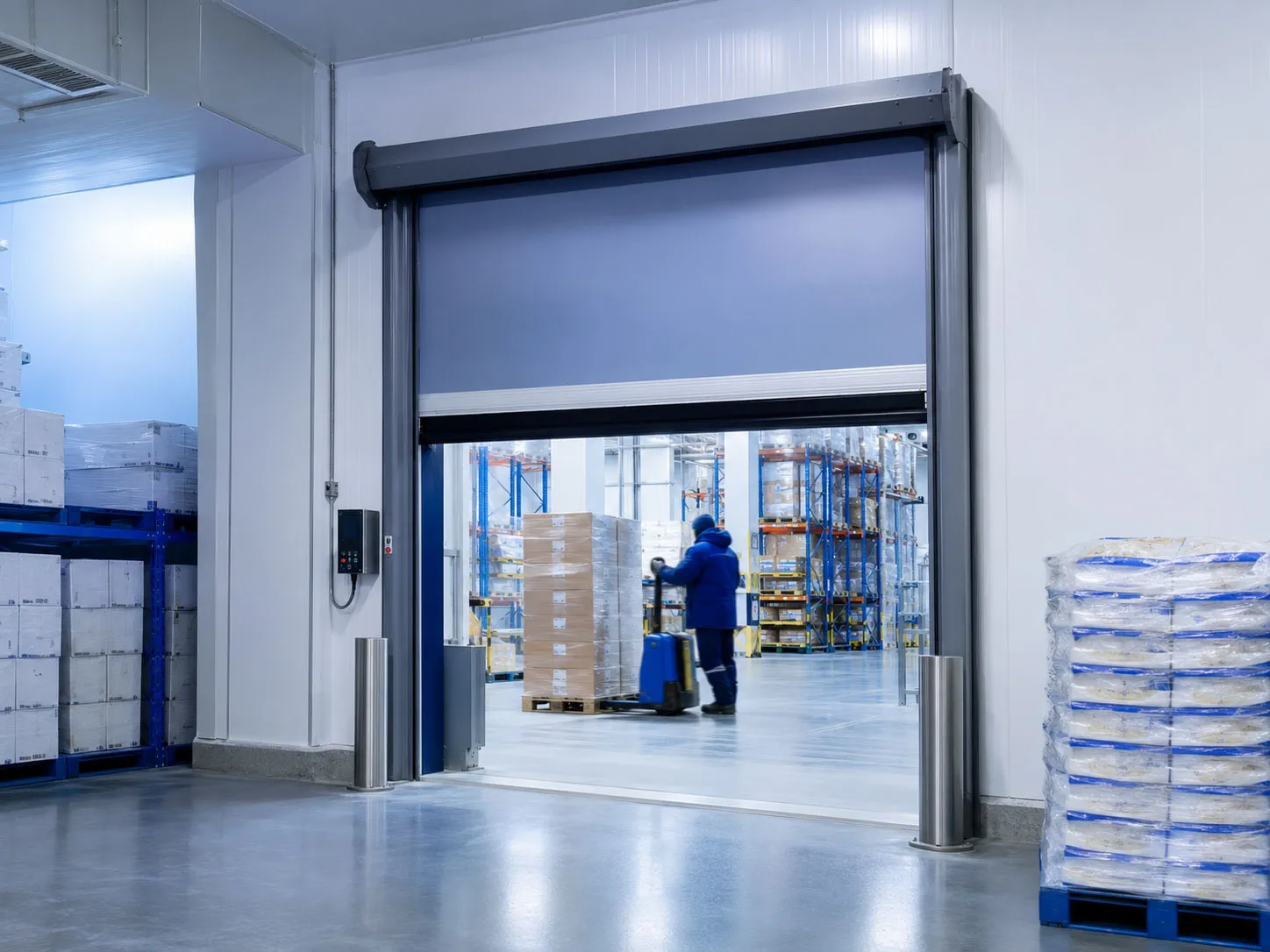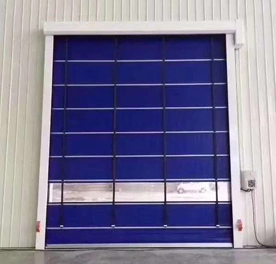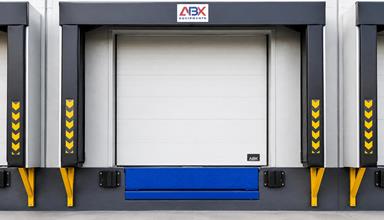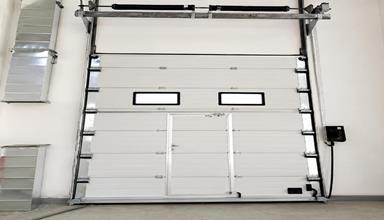
An industrial warehouse door is an access system selected according to traffic frequency, opening size, environmental separation, security and material-handling requirements.
There is no single warehouse door that fits every location. Internal forklift routes need fast, safe operation. Exterior vehicle entrances may require insulation, weather resistance and security. Loading bays must coordinate with dock equipment, and oversized goods may require a custom large-opening structure.
A warehouse door plan should therefore classify openings by function before product selection. This improves traffic flow and avoids paying for unnecessary features at low-priority locations.
Warehouse door challenges usually involve traffic congestion, impacts, uncontrolled open time, environmental leakage and inconsistent door types across a large facility.
Forklifts waiting for slow doors or drivers opening doors manually.
Doors remaining open and allowing dust, heat, cold or insects to pass between zones.
Collision damage at busy internal or loading-area openings.
Poor visibility where pedestrians and material-handling vehicles share a route.
Exterior doors that do not provide sufficient insulation or security.
Different controls and maintenance procedures across many door models.
The solution is often a coordinated door schedule using several product families with consistent controls and safety principles.
Anbixin warehouse solutions assign each opening a door type based on speed, insulation, security, opening size and loading function.
Recommended Product | Best Fit | Why It Fits |
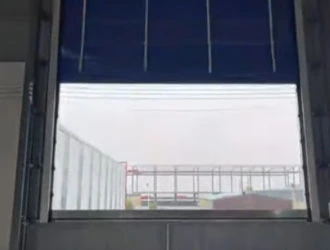
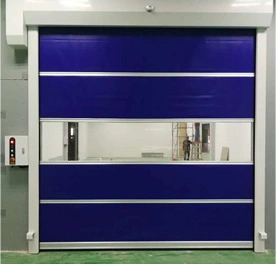
Internal forklift passages, production-to-storage routes and separated warehouse zones. | Fast cycles reduce waiting and shorten the time environments remain connected. | |
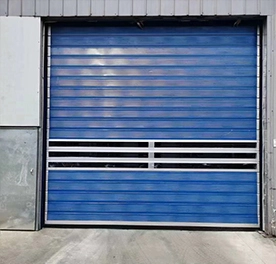
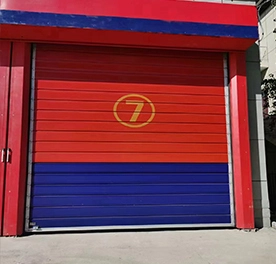
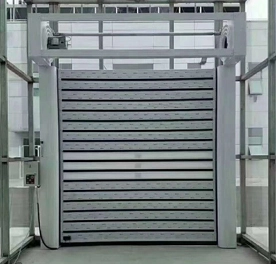
Busy exterior vehicle entrances and secure logistics access points. | Rigid insulated panels combine high-speed movement with security and weather separation. | |
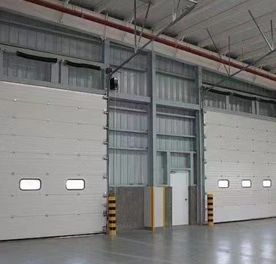
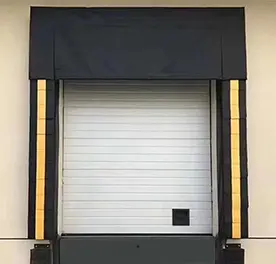
Standard exterior bays and lower-cycle warehouse entrances. | Panel insulation and flexible lift-track options suit common industrial building layouts. | |
Oversized goods, machinery and large transport access. | Custom fold-up doors provide clear openings beyond common warehouse bay dimensions. | |
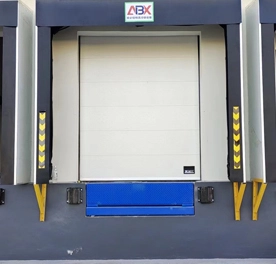
Truck loading positions and goods-transfer points. | Dock levelers and lifts bridge height differences between vehicles and the facility floor. |
Warehouse door selection is more accurate when each opening is evaluated according to its role in the material-flow process.
Warehouse Location | Main Priority | Recommended Starting Point |
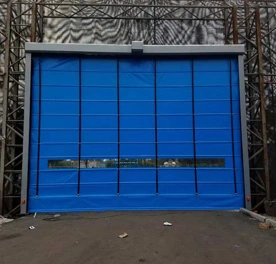
Internal forklift route | Fast traffic and separation | High-Speed Fabric Door |
Main exterior vehicle entrance | Speed, insulation and security | High-Speed Spiral Door |
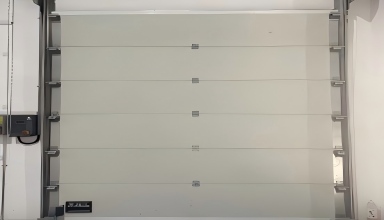
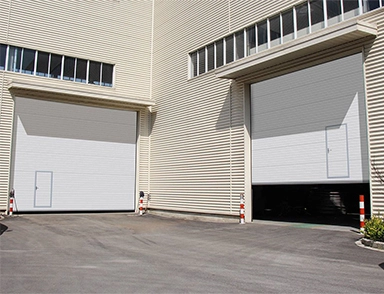
Standard service or loading bay | Insulation and dependable closure | Industrial Sectional Door |
Temperature-controlled zone | Reduced exposure and suitable insulation | Fabric, Spiral or Sectional Door |
Oversized goods entrance | Maximum clear opening | Large Industrial Door |
Truck loading position | Vehicle-to-floor transfer | Dock Leveler or Dock Lift |
A warehouse door schedule records the operational requirements for every opening before the final model and options are selected.
Number each opening on the warehouse plan and record width, height and available clearance.
Classify the location as internal, exterior, loading bay, cold area or oversized access.
Record forklifts, trucks, pedestrians and expected daily cycles.
State insulation, wind, dust, hygiene and security requirements.
Choose activation, safety, traffic-light and access-control needs.
Group similar openings to standardize sizes, controls and spare parts.
Send the completed schedule and drawings to Anbixin for product selection and quotation.
A clear schedule reduces quotation revisions and helps prevent incompatible products from being ordered for similar-looking but operationally different openings.
Using one coordinated supplier can simplify technical communication, control interfaces, installation planning and after-sales support across the facility.
Anbixin offers several industrial door families and loading dock equipment, allowing the project team to compare products through one application review. Common safety devices, activation methods and documentation formats can be standardized where practical.
For international projects, coordinated packing, shipping and installation guidance can also reduce the risk of missing components or inconsistent technical submissions.
A high-speed fabric door is commonly used for busy internal forklift routes. Exterior forklift entrances may need a high-speed spiral door for stronger security and weather separation.
Yes. Fast doors are useful at frequent traffic points, while sectional doors are suitable for lower-cycle exterior or loading-bay openings.
Use suitable activation timing, visibility, sensors, safety devices, traffic controls and a door type appropriate to impact risk and traffic frequency.
Include opening numbers, dimensions, location, traffic type, daily cycles, temperature, wind, security, controls, safety devices, quantities and drawings.