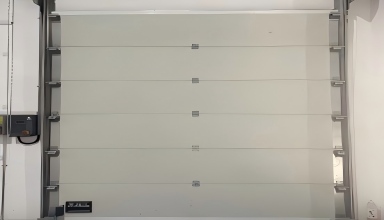
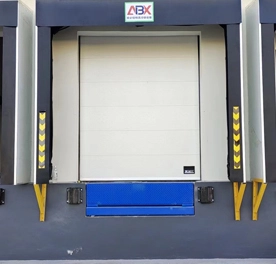
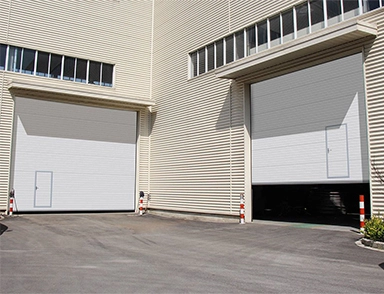
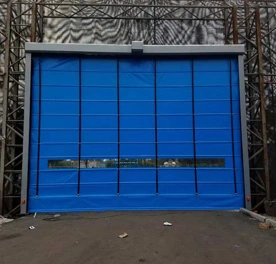
An industrial security door is a powered entrance system designed to provide a durable physical closure while controlling authorized vehicle or personnel access.
Security is influenced by how long the entrance remains open, how the door integrates with access controls and how reliably it closes after approved traffic. A slow door may leave the facility exposed, while a fast door without appropriate sensors or access logic can create operational risks.
The required security level also varies. A warehouse perimeter entrance, a restricted production area and a high-value equipment bay may require different panel structures, activation methods and monitoring functions.
Industrial entrance security requires balancing rapid authorized access, controlled closing, physical protection and safe traffic movement.
· Long opening times that allow unauthorized vehicles or pedestrians to follow approved traffic.
· Weak or flexible closures where a rigid physical barrier is preferred.
· Access systems that are not coordinated with the door opening sequence.
· Insufficient detection for mixed vehicle and pedestrian movement.
· Exterior entrances exposed to wind, rain, dust or temperature differences.
· Door downtime that forces the facility to leave an entrance open or use manual control.
A successful system combines the appropriate door structure with clear operating logic and safety devices.
Anbixin recommends security doors according to the required barrier strength, cycle frequency, opening size and exterior exposure.
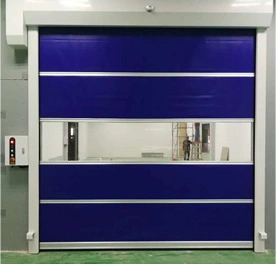
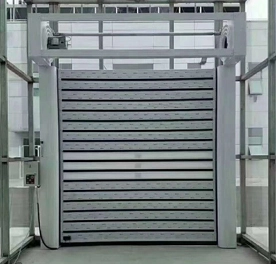
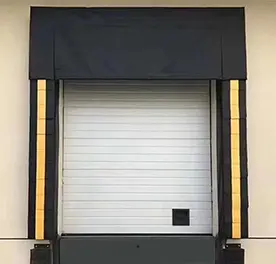
Recommended Product | Best Fit | Why It Fits |
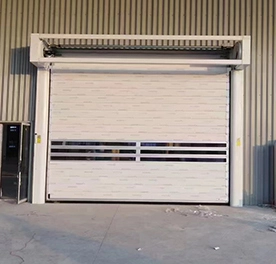
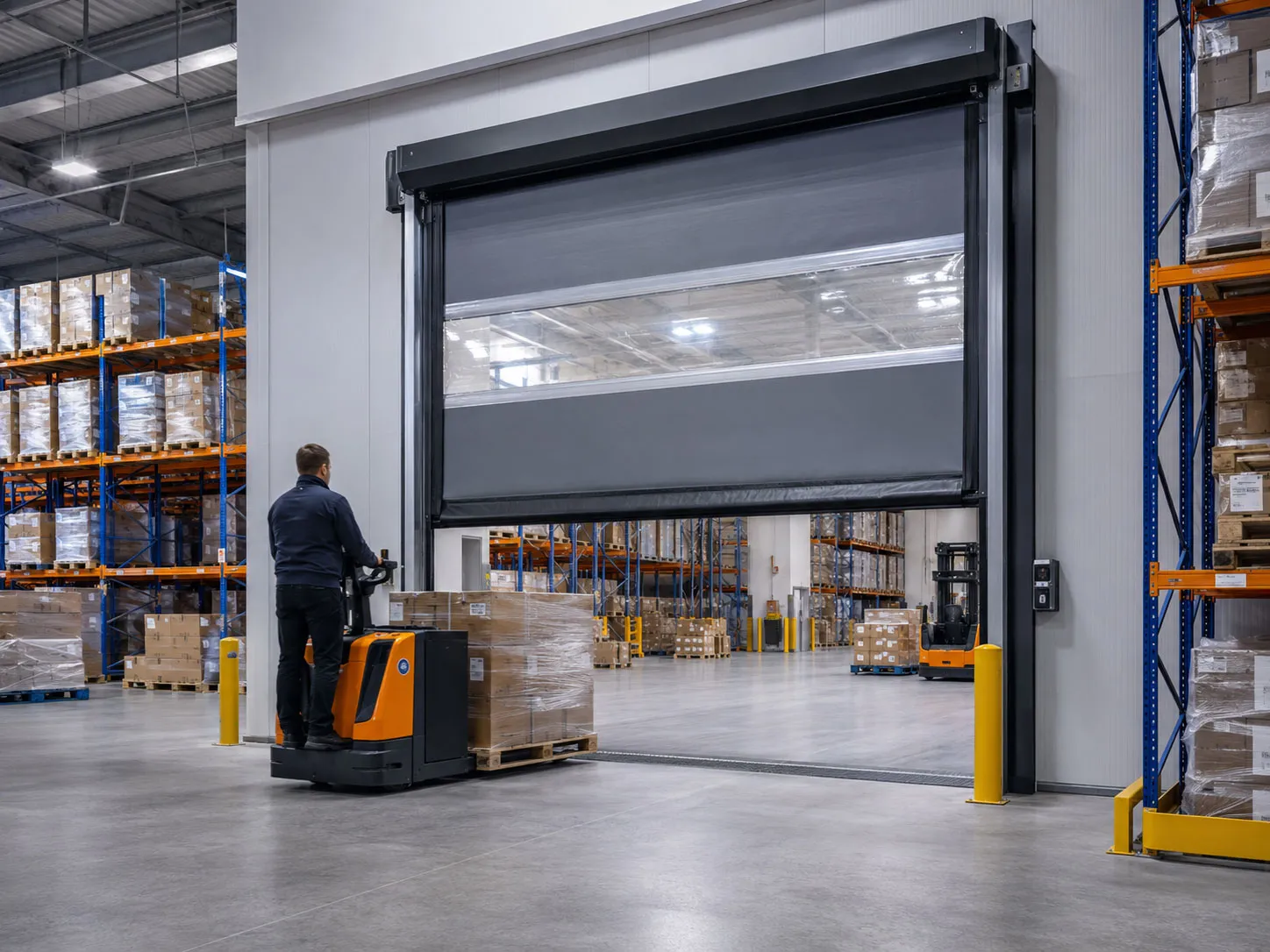
High-cycle secure entrances for vehicles and restricted facility access. | Rigid insulated panels and rapid vertical movement reduce open time while providing a substantial closure. | |
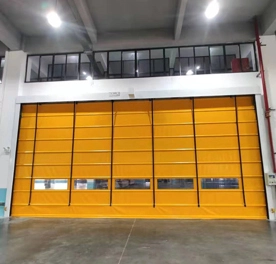
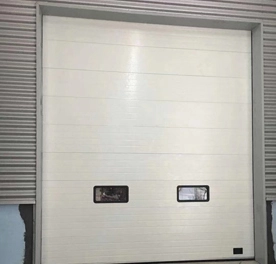
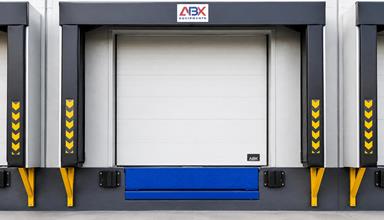
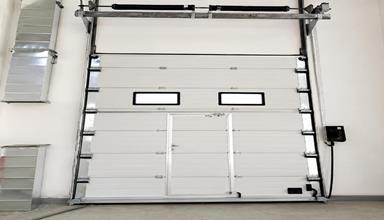
Lower-cycle equipment bays, warehouse entrances and service areas. | Rigid panels, insulation and multiple lift arrangements provide dependable security for standard industrial openings. | |
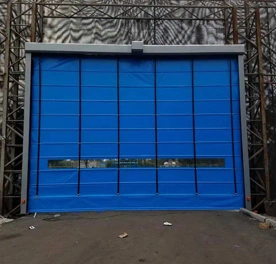
Restricted entrances for oversized vehicles or machinery. | Custom fold-up structures can create the clear opening needed for large equipment while maintaining a controlled entrance. |
For most high-frequency vehicle entrances, a high-speed spiral door is the primary option. Sectional doors remain suitable where cycle speed is less important, and large industrial doors address openings beyond common sizes.
Access-control integration coordinates authorization, door movement, traffic signaling and safety detection at the entrance.
· Remote controls, push buttons, key switches or guarded operator stations.
· Card readers, keypads, intercoms or vehicle identification systems.
· Radar sensors and vehicle loop detectors for automatic opening.
· Traffic lights, audible warnings and status indicators.
· Photoelectric sensors, light curtains and pressure-sensitive safety edges.
· Timed closing, passage confirmation and anti-tailgating logic where supported.
· Interface signals for a building access-control or security-management system.
Third-party compatibility and the exact input/output logic should be confirmed during technical review. Security functions must not disable required safety protection.
A secure industrial entrance specification should describe the threat level, authorized traffic, operating frequency and required control sequence.
Identify the entrance location, opening dimensions and exterior exposure.
Describe authorized vehicles, personnel and expected daily cycles.
State the required physical barrier and insulation level.
Define the access method and how authorization should trigger the door.
Confirm closing logic, traffic lights, monitoring and alarm requirements.
List safety devices, emergency access and power-failure procedures.
Provide interface details for third-party access or security systems.
Anbixin can then recommend a spiral, sectional or large-door configuration and prepare the control-system scope for coordination.
Multi-entrance projects benefit from a coordinated door schedule that standardizes controls while matching each opening with the correct physical door type.
Anbixin can help separate high-cycle main entrances from lower-cycle service bays and oversized equipment openings. This allows the project to concentrate high-speed security doors where they create the most value without over-specifying every location.
Consistent safety devices, control interfaces, colors and documentation can also simplify installation, training and maintenance across the facility.
A high-speed spiral door is generally the preferred starting point because it combines rapid operation with rigid panels and a controlled vertical guide system.
Potentially yes. The exact interface, control logic and third-party device compatibility must be confirmed during project engineering.
A shorter open time can reduce the opportunity for tailgating, but effective control also depends on sensors, access logic, traffic flow and site procedures.
Emergency manual release, backup power or another opening procedure can be considered according to the selected model and facility requirements.