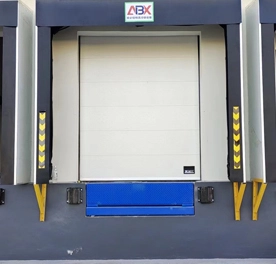
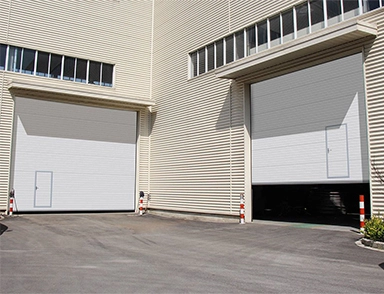
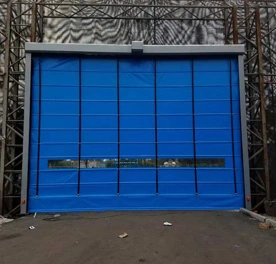
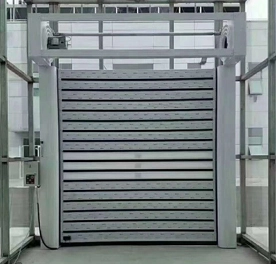
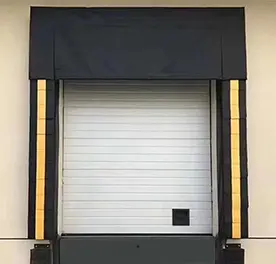
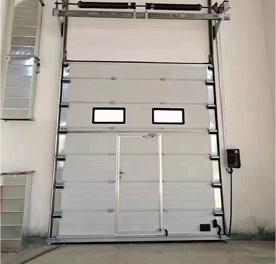
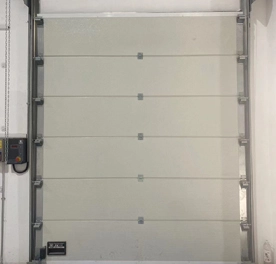
In the fast-paced world of industrial logistics and warehouse management, the efficiency of every square inch of space can dictate the success of an operation. When it comes to facility design, the choice of entry systems is one of the most critical decisions an architect or business owner can make. Among the various options available, the vertical lift door stands out as a pinnacle of engineering designed for high-clearance environments. At Anbixin, we specialize in providing robust and reliable lifting solutions that cater to the demanding needs of modern commerce, ensuring that your facility operates at peak performance.
Definition and Fundamental Mechanics of Vertical Lift Doors
A vertical lift door is a specific type of overhead door designed for buildings with significant ceiling height. Unlike standard garage doors that curve and travel along the ceiling, a vertical lift door rises straight up, staying parallel to the wall above the door opening. This design is specifically engineered for facilities where maximizing vertical space is more important than preserving ceiling clearance deep into the room.
How Vertical Tracking Works
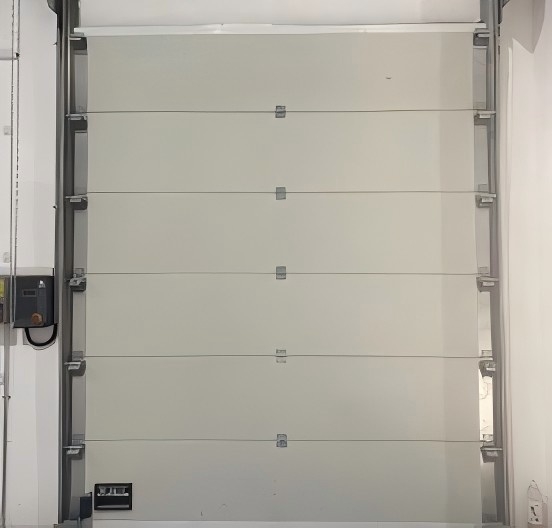
The primary differentiator of this system is its track configuration. In a vertical lift setup, the tracks extend straight up the wall. The distance the tracks extend must be at least the height of the door plus a small margin for hardware. This requires a “headroom” that is equal to or greater than the height of the door opening itself.
The Role of the Counterbalance System
Because these doors are often large and heavy, they rely on a powerful counterbalance system, typically utilizing industrial-grade torsion springs. These springs are wound to provide enough torque to offset the weight of the door, allowing it to be opened manually with ease or by a commercial-grade motor without excessive strain.
Key Components and Structural Design
To understand why these doors are so effective, one must look at the individual components that make up the system. A vertical lift door is more than just a moving wall; it is a synchronized assembly of high-strength materials.
Door Panels and Materials
Most industrial vertical lift doors are constructed from heavy-duty galvanized steel or aluminum. These panels are often “sandwiched” with insulation—such as polyurethane or polystyrene—to provide thermal resistance. This is vital for facilities that need to maintain strict temperature controls, such as food processing plants or cold storage warehouses.
Heavy-Duty Tracks and Rollers
The tracks are the guides for the entire operation. In a vertical lift system, these are usually made of thick-gauge steel to prevent flexing under the weight of the door. The rollers, which sit inside the tracks, are often equipped with precision ball bearings and nylon tires to ensure a quiet, smooth transition as the door ascends.
Vertical Lift vs. Standard Lift: A Comparison
Choosing the right door requires understanding how different lifting styles interact with your building’s architecture. The following table highlights the primary differences between the most common overhead configurations.
| Feature | Vertical Lift Door | Standard Lift Door | High-Lift Door |
|---|
| Movement Path | Rises straight up the wall | Curves 90 degrees to the ceiling | Rises partially then curves |
| Headroom Required | Door height + 12-18 inches | 12 to 24 inches total | Varies based on “high-lift” distance |
| Space Saved | Maximizes ceiling clearance | Maximizes wall clearance | Balanced compromise |
| Ideal Environment | High-ceiling warehouses | Residential garages / Low shops | Facilities with some extra height |
| Obstruction Risk | Low (Avoids lights/cranes) | High (May block lights) | Moderate |
In many industrial settings, Anbixin helps clients determine which of these configurations best suits their loading dock or warehouse entrance to ensure there is no interference with overhead cranes or lighting systems.
Primary Applications in Industrial and Commercial Sectors
Vertical lift doors are not typically found in residential homes because most houses lack the necessary ceiling height. Instead, they are the workhorses of the industrial sector.
Warehousing and Distribution Centers
In large-scale distribution hubs, vertical space is often used for high-tier racking systems. By using vertical lift doors, facility managers can ensure that the door does not interfere with the movement of forklifts or the placement of tall racks near the loading docks.
Fire Stations and Emergency Services
Speed and reliability are paramount for emergency services. Vertical lift doors are favored in fire stations because they stay out of the way of the high-profile trucks. Since the door moves straight up, there is zero risk of the door panels “dipping” into the path of a vehicle as it exits the bay.
Manufacturing Plants
In factories where overhead cranes are used to move heavy machinery, a door that rests against the ceiling would be a major obstruction. Vertical lift doors keep the ceiling clear, allowing cranes to operate right up to the edge of the building’s envelope.
Critical Advantages of Installing Vertical Lift Systems
The decision to install a vertical lift system brings several long-term benefits to a business, ranging from safety to operational efficiency.
Elimination of Track Damage: In standard lift configurations, the horizontal tracks hanging from the ceiling are susceptible to being hit by forklifts or tall cargo. Vertical lift tracks are tucked safely against the wall, significantly reducing the risk of accidental impact.
Improved Lighting and Airflow: Because the door does not block the ceiling, it does not interfere with overhead lighting fixtures or HVAC ductwork. This leads to a brighter, better-ventilated workspace.
Enhanced Durability: The simplicity of the vertical movement means there is less stress on the rollers and hinges compared to a door that must navigate a 90-degree curve. This often results in lower maintenance costs and a longer lifespan for the hardware.
Security: These doors are designed to lock firmly into the vertical tracks, providing a high level of resistance against forced entry, which is essential for protecting valuable inventory.
Maintenance and Longevity for High-Performance Doors
To keep a vertical lift door functioning at its best, a proactive maintenance approach is necessary. Given the height at which these doors operate, safety is the number one priority during inspections.
Regular Cable Inspection
The cables in a vertical lift system carry the entire weight of the door. Over time, these can fray or corrode, especially in humid or chemical-heavy environments. Inspecting these cables for “bird-caging” or broken strands is a critical safety step.
Spring Tension Adjustments
As springs age, they lose their elasticity. A door that is difficult to open or falls too quickly when being closed usually indicates that the spring tension needs to be adjusted. This task should always be performed by a professional, as the high tension in these springs can be dangerous.
Cleaning and Lubrication
Industrial environments can be dusty. Grit in the tracks can act like sandpaper on the rollers. Regularly wiping down the tracks and applying a non-silicone lubricant to the hinges and rollers will keep the door operating smoothly and quietly.
As industries continue to evolve and buildings grow taller to accommodate more goods, the demand for specialized entrance solutions continues to rise. Whether you are building a new facility or upgrading an existing one, choosing a high-quality vertical lift door from Anbixin ensures that your operation remains efficient, safe, and ready for the future of industrial logistics.
FAQs About Vertical Lift Doors
Q1: Can a vertical lift door be installed in a building with a sloped roof?
Yes, though it may require custom tracking. If the roof slopes upward, the tracks can be designed to follow the pitch of the roof (often called “pitch lift”). However, a true vertical lift requires the wall space above the door to be flat and unobstructed.
Q2: What are “break-away” bottom bars, and are they available for these doors?
Break-away bottom bars are safety features designed for high-traffic areas. If a forklift hits the bottom of the door, the bar releases from the tracks without damaging the entire door structure. This allows for quick resets and prevents costly door replacements.
Q3: How do vertical lift doors handle high wind loads?
Due to their reinforced steel construction and deep-seated track engagement, vertical lift doors are highly effective against wind. For coastal or high-wind areas, manufacturers can add “wind-load” reinforcement struts to the panels to prevent the door from bowing under pressure.
Q4: Is it possible to add windows to a vertical lift door?
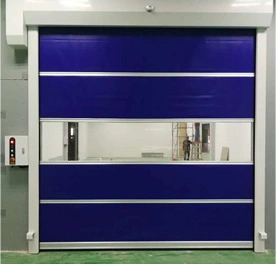
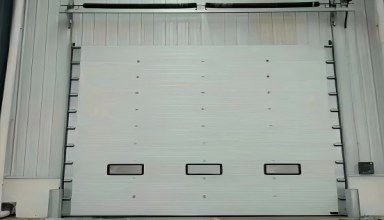
Absolutely. You can incorporate “vision lites” or full-view glass sections into the panels. This is common in facilities where employees need to see outside for safety before opening the door, or to allow natural light into the warehouse.