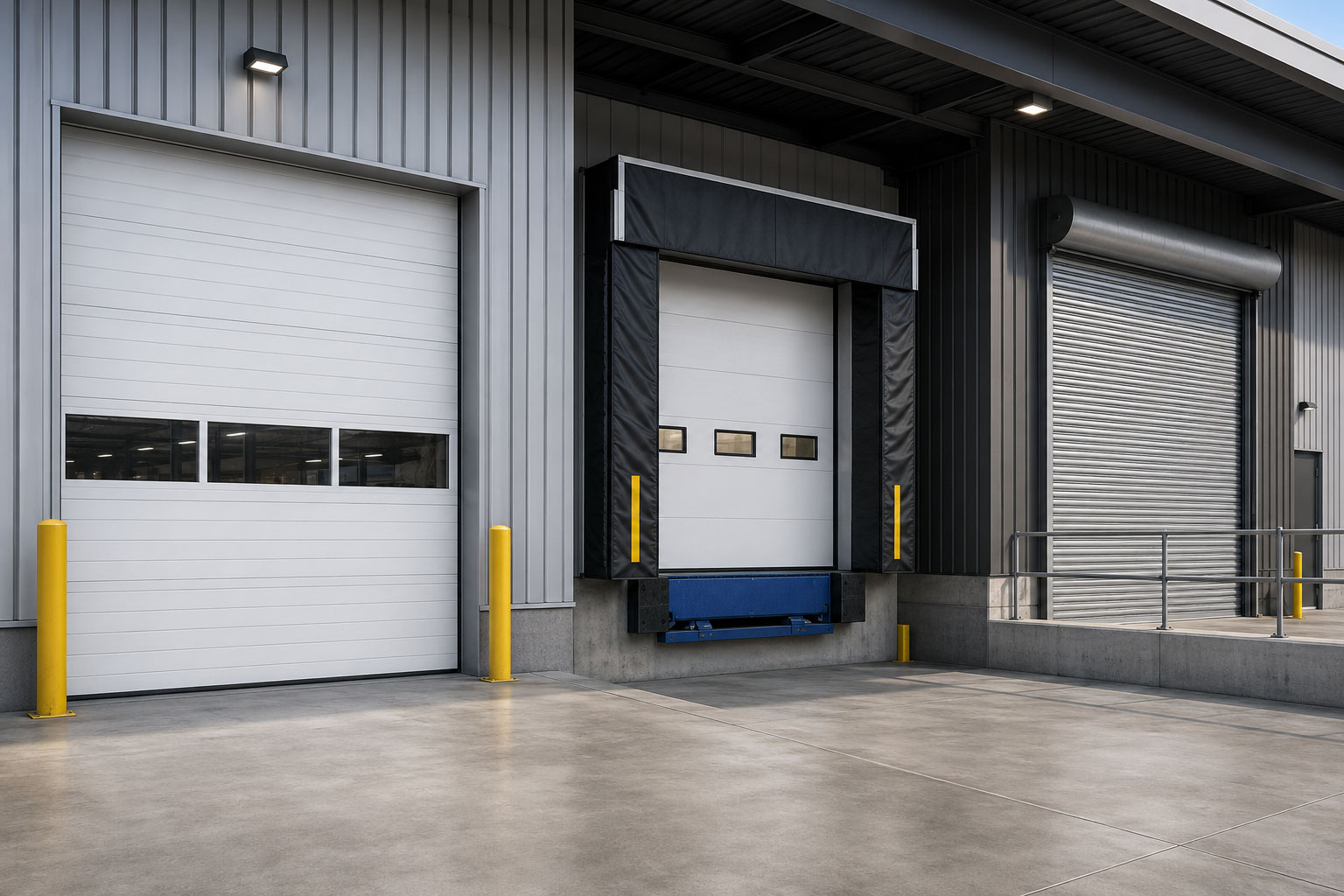
A dock leveler is a loading dock device that bridges the height difference between a warehouse floor and a truck bed, allowing forklifts and goods to move between them. Mechanical, hydraulic, and air-powered dock levelers perform the same basic function but differ in their lifting mechanisms, controls, maintenance requirements, and suitability for different loading operations.
The right choice depends on truck height variations, handling equipment, daily loading frequency, available utilities, and the facility's maintenance capabilities. Understanding these differences before purchasing helps prevent unnecessary operating costs and performance problems.
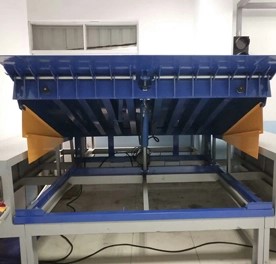
Mechanical Dock Levelers: Practical to Lower-Volume Operations
Mechanical dock levelers use springs, levers, and a manual release mechanism to raise and position the platform. Once activated, the operator positions the leveler so its lip rests on the truck bed, creating a bridge for material handling equipment.
Their main advantage is mechanical simplicity. They generally require less initial investment than powered alternatives and do not need a dedicated hydraulic power unit or air supply. This makes them attractive for smaller warehouses, facilities with limited loading activity, or locations where minimizing initial equipment cost is important.
However, operators must manually activate and position the equipment. Repeated operation can increase physical effort and reduce workflow efficiency at busy loading bays. Springs, hinges, linkages, and other moving components also require routine inspection and adjustment.
Mechanical dock levelers are most appropriate when loading frequency is relatively low, operators can safely manage manual controls, and the facility accepts the additional handling time.
Hydraulic Dock Levelers: Designed for Frequent Loading
Hydraulic dock levelers use an electric motor, hydraulic pump, and cylinders to raise the platform and position the lip. Operators typically control the process using push buttons, making daily operation more convenient and consistent.
Hydraulic systems are often a strong choice for distribution centers, manufacturing facilities, and warehouses where multiple trucks arrive throughout the day. Powered operation reduces manual effort and supports a more repeatable loading process. Depending on the model, controls can also integrate with other loading dock equipment.
The main considerations are higher initial investment, electrical requirements, and hydraulic-system maintenance. Hoses, seals, cylinders, fluid levels, and electrical components should be inspected according to the manufacturer's schedule. Hydraulic leaks or component failures can interrupt operations if replacement parts and service are not readily available.
For facilities prioritizing throughput, operator convenience, and controlled operation, hydraulic dock levelers are worth evaluating first.
Air-Powered Dock Levelers: An Alternative Without Hydraulic Fluid
Air-powered dock levelers use an inflatable air system to raise the platform, typically through an air bag and an integrated blower or another specified air supply arrangement. The exact mechanism depends on the manufacturer's design, so buyers should confirm the required utilities and operating sequence for the selected model.
One advantage is that the lifting mechanism does not rely on hydraulic fluid. This can simplify certain maintenance tasks and eliminate hydraulic-oil leakage as a potential source of contamination. The system may also have fewer hydraulic components to inspect.
However, air-powered does not necessarily mean electricity-free. A blower, control system, or compressed-air supply may still be required. Air bags, hoses, valves, and inflation components also need inspection for wear, damage, and leakage.
Air-powered dock levelers can suit facilities seeking an alternative to hydraulic equipment, particularly where the available service infrastructure and operating conditions support the selected design. Buyers should verify load ratings, cycle suitability, replacement-part availability, and maintenance requirement.
Mechanical vs. Hydraulic vs. Air-Powered: Key Differences
The following comparison summarizes the practical differences buyers should consider when evaluating dock leveler types for a warehouse or distribution facility.
Selection Factor | Mechanical | Hydraulic | Air-Powered |
Lifting mechanism | Springs and manual linkage | Pump and hydraulic cylinders | Inflatable air system |
Operator input | Manual activation and positioning | Typically push-button control | Typically powered controls |
Initial investment | Generally lower | Generally higher | Model-dependent |
Physical effort | Higher | Lower | Lower |
High-frequency operations | Depends on workflow and model | Often well suited | Depends on model and duty rating |
Maintenance focus | Springs, hinges, and linkages | Fluid, hoses, seals, and cylinders | Air bag, valves, hoses, and blower |
Utility requirements | Usually no dedicated powered lifting system | Electrical power | Electrical power or specified air supply |
Main purchasing consideration | Manual effort and throughput | Lifecycle cost and hydraulic servicing | Air-system reliability and service support |
The actual capacity, operating speed, cycle life, and maintenance intervals depend on the design and manufacturer's specifications.
How to Choose the Right Dock Leveler for Your Facility
The best dock leveler is the one that matches the physical loading bay, the loads being handled, and the facility's daily workflow. Before comparing quotations, assess the following factors.
Load capacity and forklift traffic: Specify the combined load imposed by the forklift, cargo, and other equipment, including relevant dynamic forces and wheel-load distribution. Do not select a leveler based solely on the weight of the goods being transported.
Truck height variation: Record the minimum and maximum truck-bed heights. The leveler must provide a suitable working range and safe transition for the vehicles that regularly use the dock.
Daily loading frequency: A facility handling a few deliveries per shift may prioritize low initial cost, while a high-throughput distribution center may benefit more from powered operation and reduced handling time.
Maintenance resources: Consider whether trained technicians, spare parts, hydraulic service, or pneumatic-system support are readily available. The purchase price alone does not reflect the full cost of ownership.
Dock layout and environmental conditions: Check pit dimensions, available installation space, drainage, temperature exposure, moisture, corrosion risks, and the interface with doors and dock seals.
Where a project requires a different elevation transition or a broader loading arrangement, review the loading dock platform options alongside the leveler. The objective is to ensure that the complete loading bay accommodates the vehicles, handling equipment, and operational requirements.
Safety and Installation Requirements
Dock leveler safety depends on the complete system, not just the lifting mechanism. A correctly rated platform can still create hazards if the truck moves during loading, the equipment is poorly installed, or operators use an unsuitable transition.
Before commissioning, confirm the rated capacity, installation and anchoring requirements, lip engagement, vehicle restraint procedures, and safety features. Inspect the platform and surrounding dock area for damage, obstructions, and slipping hazards. Maintenance should follow the manufacturer's instructions, including the use of designated mechanical safety supports before personnel work beneath raised equipment.
What to Include in a Dock Leveler RFQ
A detailed request for quotation helps suppliers recommend suitable equipment and makes proposals easier to compare. Include:
Dock height and minimum and maximum truck-bed heights.
Required rated capacity and forklift specifications.
Expected loading cycles per day and operating environment
Preferred mechanism, available electrical supply, and any compressed-air requirement.
Pit dimensions, installation constraints, and dock configuration.
Required safety features, applicable standards, and documentation.
Warranty, maintenance requirements, spare-parts availability, and delivery schedule.
Ask suppliers to identify the exact model, rated capacity, operating range, utility requirements, and included safety features. If a powered system is proposed, confirm the controls and operating sequence before approving the quotation.
Conclusion
Mechanical, hydraulic, and air-powered dock levelers serve the same purpose but suit different operating conditions. Mechanical models can be attractive for lower-volume facilities seeking a simpler, lower-cost solution. Hydraulic models often suit frequent loading where powered operation and operator convenience matter. Air-powered models offer an alternative without hydraulic fluid, provided their air-system design and service requirements fit the facility.
Before making a decision, compare the total operating requirements, load rating, truck-height range, maintenance resources, and safety provisions. A well-specified dock leveler should support the actual loading workflow rather than simply meet the lowest purchase price.
FAQ
Which type of dock leveler is best for a busy warehouse?
Hydraulic dock levelers are often a strong option because powered operation reduces manual effort and supports frequent loading. Confirm that the selected model's capacity and duty rating match the workload.
Are mechanical dock levelers cheaper than hydraulic models?
Mechanical models generally have a lower initial purchase cost, but manual operation and maintenance should also be considered when evaluating long-term expenses.
Do air-powered dock levelers require electricity?
Many designs use an electric blower and controls, while others may require a specified air supply. Confirm the utility requirements of the exact model before ordering.
How do I determine the required dock leveler capacity?
Consider the forklift, cargo, wheel-load distribution, and relevant dynamic forces. Confirm the required rating with the manufacturer rather than relying only on cargo weight.
How often should a dock leveler be maintained?
Inspection frequency depends on the equipment design, operating cycles, environment, and manufacturer's instructions. High-use facilities may need more frequent checks of wear components and safety devices.
Can a dock leveler be customized for different truck heights?
Many systems offer different operating ranges and configurations. Provide the dock elevation and the minimum and maximum truck-bed heights so the supplier can verify suitability.